
AI Services
Generative Engine Optimization (GEO)
Be the business AI platforms recommend.
AI Services
The AI knows your competitor’s name, and not yours
Generative Engine Optimization (GEO) is the practice of making AI platforms understand, trust, and recommend a business as an entity. CICOR Marketing delivers GEO by making business information consistent everywhere it appears, adding Organization, Person, and Service schema with knowsAbout properties, publishing authority content, maintaining llms.txt, and earning the third-party citations that AI models use as proof of expertise. GEO is one half of AI Search Optimization. The other half, Answer Engine Optimization, makes each page the answer to a question.
Picture a facilities manager in Naperville asking Gemini, “Who are the best commercial roofing contractors near Chicago?” The answer names three companies. Each one has the same name, address, and services listed everywhere it appears online, a clear page about who it is, and a handful of outside sites that mention it. The AI is repeating what the web agrees on.
If the web does not agree on who you are, you do not make the list. GEO is the work of building that agreement. It is the entity half of the AI Search Optimization plan, and it comes first when AI platforms do not yet know your business.

See It In Action
Watch How One Citation Leads To The Next
Generative engines build answers from the sources they already trust. Here is how a single strong citation grows into steady visibility across AI platforms for your business.
Who It Fits
Who this is for, and who it is not
GEO fits a business that wants to be recommended by name: a local company competing for “best near me” answers, a professional firm that wants to be the one named for its specialty, or a company with a new name, a new location, or a recent merger that confused the web. It fits one location or many.
It is not the right fit for a business that cannot say in one sentence what it does and for whom. GEO makes the web agree with you, so you need something clear to agree on. If that sentence is missing, we will say so and point you to brand and messaging work first.
What Is Included
What is included
AUTHORITY
Entity consistency across the web
We audit every place your business appears: your site, Google Business Profile, directories, social profiles, and partner listings. Then we fix the name, address, phone, categories, and description so they match everywhere.
TECHNICAL
Organization, Person, and Service schema
We add structured data that tells machines who you are, who leads the business, what services you offer, and which topics you know. The knowsAbout property is the one most sites skip and the one that ties your name to your specialty.
DIAGNOSIS
llms.txt and crawler access
We publish an llms.txt file on your site that lists your key pages and what each one is about, and we confirm AI crawlers can reach the pages that matter. It is a small file that tells AI platforms where to look first.
PLANNING
Authority content plan
We plan and write the pages that prove your expertise: the service pages, the people pages, and the Learning Center articles that answer your customers’ questions.
FOUNDATION
Third-party citations
AI platforms weight what other sites say about you more than what you say about yourself. We identify the directories, roundups, trade publications, and podcasts in your category and build a target list.
EXECUTION
Monthly AI citation check
Each month we ask ChatGPT, Google AI Overviews, Perplexity, Gemini, and Copilot the questions your customers ask, and we record whether your business is named and who is named instead. The report shows the trend against your baseline next to the work done that month.
How We Work
How it works
1. Month one. We run the baseline across the five platforms, audit every listing and profile, and write your entity description: the one paragraph every listing will use.
2. Months two through four. We fix the listings, publish the schema and llms.txt, and ship the first authority pages. The monthly check starts against the baseline.
3. Month five onward. We keep publishing, build the outside mentions with Digital PR where it is in scope, and retest every month. AI platforms re-evaluate slowly, so plan on months, not weeks.
Your part is to confirm the facts about your business once, approve each page, and tell us when anything changes.
AI Services
GEO and SEO: what is the difference
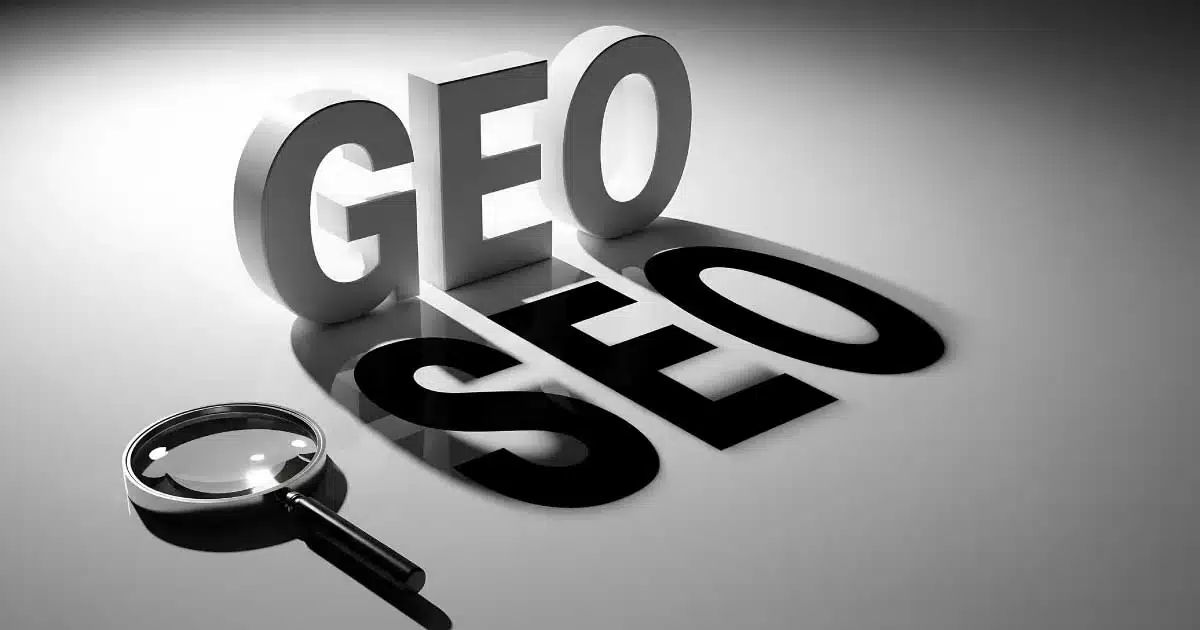
The difference between GEO and SEO is what gets optimized. SEO optimizes pages so they rank for searches. GEO optimizes the business itself, as an entity, so AI platforms recognize it and recommend it by name.
They share the same foundation. A site that AI platforms trust is a site Google can crawl, index, and rank. GEO adds entity consistency, schema, llms.txt, and outside mentions on top of that. CICOR Marketing runs both from one plan because the signals overlap, and because a business that fixes one without the other leaves half the work undone.
Why It Matters
Why CICOR Marketing for GEO
GEO from CICOR Marketing comes with a named person on the account. CICOR Marketing has worked in marketing and IT since 1997 and was building AI search readiness before AEO and GEO had names. The fee is a plain, scoped quote after one call. GEO ships with SEO and Digital PR from one team, because the signals overlap and a business that fixes one without the others leaves work undone.
We also run it on our own site. CICOR Marketing publishes its own llms.txt file and structures its own site the way it recommends to clients.
Start The Conversation
Ask About Generative Engine Optimization (GEO)
Tell us what you are trying to achieve. CICOR Marketing replies within one business day with next steps.
- A reply from CICOR Marketing within one business day
- A free consultation, limited to 30 minutes
- A plan before any spend
Generative Engine Optimization (GEO) FAQs
GEO optimizes the business as an entity so AI platforms recognize and recommend it by name. SEO optimizes pages so they rank for searches. Both depend on a site that can be crawled and trusted, so the work overlaps. CICOR Marketing runs GEO and SEO from one plan rather than selling them as separate products.
Generative Engine Optimization (GEO) is the practice of making AI platforms understand, trust, and recommend a business as an entity. It means keeping business information consistent everywhere it appears, adding Organization, Person, and Service schema, publishing authority content, maintaining llms.txt, and earning outside mentions. CICOR Marketing delivers GEO inside its AI Search Optimization plan and checks the results monthly.
GEO strategies are built to improve visibility across the major generative AI platforms that users interact with when researching products, services, and local businesses. These currently include ChatGPT (including its search and browsing modes), Google Gemini, Microsoft Copilot, Perplexity AI, and Google AI Overviews embedded within traditional Google Search. Each platform has different tendencies in how it retrieves and cites information, which is why a GEO strategy addresses content quality, entity signals, and third-party authority simultaneously rather than optimizing for one platform in isolation.
As AI search continues to evolve, new platforms gain relevance and existing ones change how they source content. A GEO strategy is not static, it includes ongoing monitoring across platforms to identify where a brand is appearing, where it is absent, and where competitors are earning mentions that should be recoverable.
The underlying principles that drive visibility across all these platforms are consistent: content that is factually accurate, clearly structured, well-sourced, and organized around the questions users are actually asking. A site that meets those standards is positioned to benefit from GEO regardless of which AI platform gains or loses market share.
GEO cost depends on the size of the website, the strength of existing content, the level of competition in the market, and how much authority needs to be built from the current baseline. A small business with a clear service focus and a well-structured site may need a lighter GEO engagement centered on content optimization, FAQ expansion, schema implementation, and entity clarity. A larger business competing in a crowded category or starting from a weak content foundation will require more comprehensive work over a longer period.
Compared to paid advertising, GEO builds value that compounds over time rather than stopping when spend stops. A page optimized for AI visibility continues earning citations and mentions after the initial work is done, whereas a paid ad delivers results only while the budget is active. This makes GEO more similar in cost structure to traditional SEO; a longer-term investment that builds durable visibility rather than renting attention.
Comparing GEO directly to traditional offline marketing is more difficult because the measurable outcomes are different. GEO drives specific, intent-based visibility at the moment a prospect is asking a relevant question, which makes it more targeted than broad-reach media like TV or print. The right cost comparison depends on what the business is currently spending to reach prospects at that same high-intent moment.
A regular Google search has always worked the same basic way. A person types a question, Google returns a list of websites, and the person clicks through one of them to find an answer. An AI search agent works differently. Instead of only returning a list of links, Google’s AI can now research a topic on its own, monitor it over time, and in some cases even complete a task, like booking an appointment, with very little extra effort from the person searching. This shift was introduced at Google’s 2026 Search announcement, and Google has described it as the most significant change to how Search works in roughly twenty five years. The person searching still starts the same way, by asking a question or describing what they need, but what happens after that question is asked has changed in a meaningful way, and it changes again the longer a person keeps interacting with the same search.
Think about the difference between asking a friend a quick question and asking a personal assistant to handle something for you. A traditional search is the quick question. An AI search agent behaves more like the assistant. If someone searches for a reliable plumber in their area, a traditional search shows a list of nearby plumbing websites and directory listings for the person to review one by one, comparing hours, reviews, and services themselves. An AI search agent can instead gather information from several of those businesses at once, compare hours, services, and reviews on the person’s behalf, and present a short, direct answer, or in some cases check availability and help schedule the appointment itself. The search box itself was also redesigned to accept photos, files, and video, not just typed words, so even the starting point of a search looks noticeably different than it did a year ago.
For a business, this changes what it means to be found. Ranking on a results page mattered because a person had to see your website in a list and choose to click on it themselves. Now, an AI system is often doing some of that evaluating on the customer’s behalf before a person ever sees a website at all, which means a business can be quietly included or excluded from consideration long before a human visitor would have made that same judgment. A business with unclear hours, an out of date phone number, or services buried in a photo instead of plain text can lose a customer’s consideration without ever knowing an AI agent looked at it and moved on. That makes it more important than ever for a business’s information, hours, services, and pricing, to be accurate, consistent, and easy for an AI system to read, rather than something a person has to dig for or interpret from context. This is the practical foundation of Answer Engine Optimization and Generative Engine Optimization, the two disciplines CICOR Marketing uses to help a business show up clearly and get recommended inside these new kinds of AI powered answers, rather than quietly falling out of consideration before a human ever gets involved.
AI platforms recommend businesses the web agrees on. They look for a business whose name, address, and services match across its site, its Google Business Profile, and directories; whose pages state clearly what it does and for whom; and that other trusted sites mention. Reviews, structured data, and an llms.txt file help them read all of that. No single signal decides it, which is why GEO works on all of them.
Traditional SEO focuses on ranking a website in search engine results pages so users click through to the site. GEO (Generative Engine Optimization) focuses on ensuring that content is used as a source by AI systems like ChatGPT, Gemini, Perplexity, and AI Overviews when they generate answers to user questions. In SEO, success is measured by rank position and click-through traffic. In GEO, success is measured by how often and how accurately AI tools draw from and cite the content.
The underlying technical requirements differ as well. Traditional SEO emphasizes crawlability, link authority, keyword optimization, and page performance. GEO emphasizes content structure, factual clarity, authority signals, and the kind of source-worthy writing that AI systems are designed to recognize and reproduce. GEO content is written to answer questions directly and completely, not to attract a click, but to be the answer that an AI delivers verbatim or in paraphrase.
The two disciplines are complementary rather than competing. Content optimized for GEO typically also performs well in SEO because clear, well-structured, authoritative content is what both search engines and AI systems evaluate favorably. Businesses that invest in both benefit from traditional search visibility and from being named or quoted in the AI-generated answers that are increasingly replacing the first page of search results.
GEO success is measured by tracking how often a brand, service, or specific page appears in AI-generated answers, AI search summaries, and recommendation-based responses across the major platforms. Key signals include citation frequency (how often the brand is mentioned or linked in AI answers), citation context (whether the mention is positive, relevant, and accurate), and query coverage (which types of questions are triggering the brand’s appearance vs. where competitors appear instead).
Supporting metrics include changes in branded search volume in Google Search Console; an increase often correlates with growing AI-driven awareness, as well as traffic from AI referral sources, improvements in featured snippet and AI Overview appearances, and engagement quality from visitors who arrive via question-based queries.
Because GEO results do not appear in a single dashboard the way traditional rankings do, measurement requires combining specialized AI monitoring tools with standard SEO analytics. Regular reporting establishes a baseline and tracks directional progress across platforms over time, making it possible to connect GEO activity to measurable improvements in brand visibility and inbound inquiry quality.

Ready When You Are
Give the web one clear story to agree on
Every listing, profile, and page that describes your business is a vote on who you are. Right now some of those votes disagree, and AI platforms notice. GEO settles the story and tells it the same way everywhere. The audit shows where the votes disagree today.